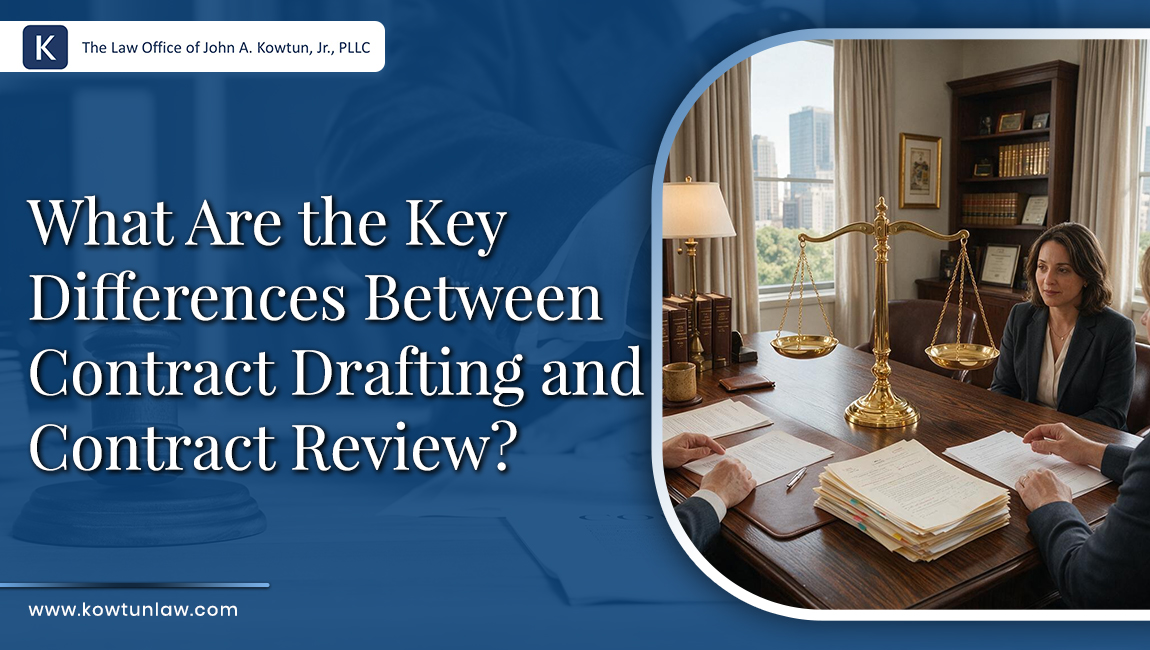
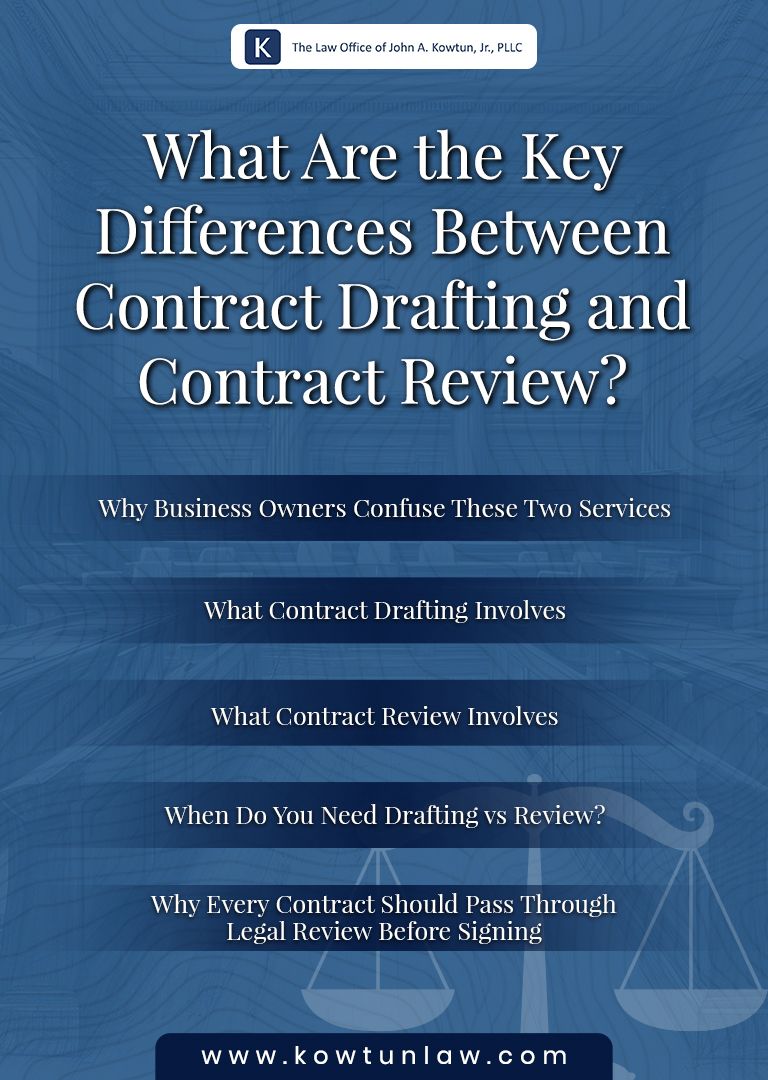
What Are the Key Differences Between Contract Drafting and Contract Review?
Contract drafting means creating a new agreement from scratch to reflect your specific business terms, obligations, and protections. Contract review means having an attorney examine an existing contract, often one prepared by another party, to identify risks, unfavorable clauses, ambiguities, and missing protections before you sign. At Kowtun Law, we assist Texas businesses with both services. Drafting helps build agreements that proactively protect your interests, while review helps uncover hidden liabilities and negotiation opportunities in contracts presented to you.
Business owners frequently use the terms “contract drafting” and “contract review” interchangeably. Although both services involve legal agreements, they serve different purposes and are used at different stages of a business transaction.
Understanding the distinction is important because the type of legal assistance you need depends on whether you are creating a contract for someone else to sign or evaluating a contract that has already been presented to you.
At Kowtun Law, our experience in business and transactional law allows us to guide clients through both processes with an emphasis on clarity, enforceability, and risk management.

Why Business Owners Confuse These Two Services
Many business owners simply want legal help with a contract and may not realize that drafting and review involve different legal tasks. Recognizing the distinction can help you choose the service that best protects your interests.
Assuming any legal contract help is the same service
It is common for business owners to view all contract-related legal work as a single category. In reality, contract drafting and contract review require different approaches.
Contract drafting involves creating the terms of the agreement, defining the parties’ rights and obligations, and anticipating potential areas of dispute.
Contract review, on the other hand, focuses on analyzing an existing document to determine whether its terms are fair, clear, and aligned with your business goals.
Signing agreements drafted by the other party without review
When another party provides a contract, the document is often written to protect that party’s interests. Signing without legal review can expose your business to obligations or liabilities that were not fully understood at the time of signing.
At Kowtun Law, we routinely review agreements prepared by vendors, partners, and other third parties to identify provisions that may require clarification or negotiation.
The cost of an unfavorable clause discovered too late
An unfavorable clause may not become problematic until a dispute arises. By that point, the contract has already been signed, and changing the terms may be difficult or impossible.
Common issues that may be discovered too late include overly broad indemnification clauses, one-sided termination rights, unclear payment terms, and liability provisions that place excessive risk on one party.
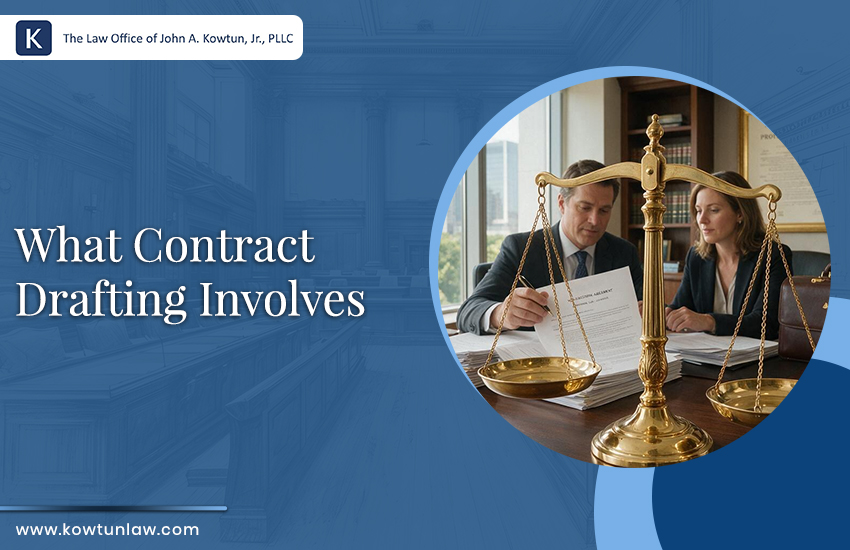
What Contract Drafting Involves
Contract drafting is the process of creating a new agreement tailored to a specific business relationship or transaction. The goal is to establish clear terms that protect your interests and reduce the likelihood of future disputes.
Structuring terms to reflect your business’s needs and risk tolerance
A well-drafted contract should reflect the practical realities of your business operations. This includes clearly defining the scope of work, payment obligations, timelines, performance standards, confidentiality requirements, and procedures for resolving disputes.
At Kowtun Law, we draft agreements with the understanding that each business relationship has unique operational and legal considerations. Our goal is to create contracts that are both practical and legally enforceable.
Common contract types businesses need drafted
Businesses often require customized agreements for various relationships and transactions, including:
- Vendor agreements
- Service agreements
- Non-disclosure agreements (NDAs)
- Employment agreements
- Independent contractor agreements
- Partnership or joint venture agreements
Each of these contracts should be drafted to address the specific obligations, risks, and expectations of the parties involved.
Building in protections proactively rather than reactively
One of the primary advantages of contract drafting is that protections can be built into the agreement from the beginning. This proactive approach allows businesses to address potential issues before they arise.
Examples of protective provisions include limitation of liability clauses, indemnification terms, confidentiality obligations, intellectual property protections, and clearly defined termination rights.

What Contract Review Involves
Contract review is the process of analyzing an existing agreement to identify legal risks, unfavorable terms, ambiguities, and missing protections. This service is particularly important when another party has prepared the contract.
Identifying unfavorable or one-sided clauses
A contract may contain provisions that disproportionately benefit the other party. During a review, attorneys examine whether the agreement imposes unreasonable obligations or shifts excessive risk onto your business.
Examples of clauses that may warrant closer scrutiny include broad indemnification provisions, automatic renewal terms, restrictive non-compete clauses, and termination rights that favor only one party.
Checking for missing protections
In addition to identifying problematic language, contract review also involves determining whether important protections are absent. Missing provisions can create uncertainty and increase the likelihood of disputes.
Areas commonly reviewed include:
- Indemnification obligations
- Liability limitations
- Termination rights
- Confidentiality requirements
- Dispute resolution procedures
- Intellectual property ownership
Negotiating changes before signing
Contract review does not necessarily mean rejecting the agreement. Often, the review process identifies specific provisions that should be revised to better protect your interests.
At Kowtun Law, we help clients understand the practical implications of contract terms and recommend revisions that can improve fairness, clarity, and risk allocation before the agreement is executed.
When Do You Need Drafting vs Review?
The choice between contract drafting and contract review depends on the stage of the transaction and your role in the agreement. In many ongoing business relationships, both services may be needed over time.
You’re the one initiating the agreement — drafting
If your business is creating a contract for another party to sign, contract drafting is generally the appropriate service. Drafting allows you to establish the terms of the relationship and include protections that align with your business objectives.
Examples include preparing a service agreement for a client, drafting a vendor contract, or creating an NDA for a potential business partner.
Someone else sent you a contract to sign — review
If another party has presented a contract to your business, contract review is typically the appropriate service. Review helps identify whether the agreement contains hidden risks, unclear language, or terms that should be negotiated.
This is especially important for contracts involving significant financial commitments, long-term obligations, intellectual property rights, or liability exposure.
Ongoing business relationships — why both services matter over time
Many businesses require both drafting and review services as they grow. For example, a company may need custom contracts drafted for its own customers while also reviewing contracts received from suppliers, landlords, and strategic partners.
Using both services strategically can help maintain consistency in your contractual relationships and reduce the risk of unfavorable obligations.
Cost comparison between drafting and reviewing
Contract drafting and contract review differ in scope, which can affect the time and cost involved. Drafting generally requires creating a new agreement tailored to the client’s needs, while review involves analyzing and advising on an existing document.
At Kowtun Law, we discuss the scope of work with clients so they understand the services being provided and the value of addressing contract issues before they become costly disputes.

Why Every Contract Should Pass Through Legal Review Before Signing
Regardless of who prepared the contract, legal review before signing can help identify risks that may not be apparent from a general reading of the document. This step is an important part of protecting your business interests.
What attorneys catch that non-lawyers typically miss
Attorneys are trained to analyze contractual language for legal implications that may not be obvious to non-lawyers. This includes identifying ambiguous terms, conflicting provisions, hidden liabilities, and clauses that may have significant financial consequences.
At Kowtun Law, our contract review process focuses on both the legal language and the practical impact the agreement may have on your business operations.
Building a standard process for contract handling in your business
Establishing a consistent process for handling contracts can reduce risk and improve efficiency. Businesses may benefit from implementing procedures such as:
- Reviewing all significant contracts before signing
- Using attorney-drafted templates for recurring agreements
- Maintaining records of executed contracts and amendments
- Periodically reviewing standard agreements to ensure they remain current and effective
Long-term cost savings of catching issues before signing
Addressing contract issues before execution is often far less expensive than resolving disputes after the contract has been signed. A proactive legal review can help avoid litigation, financial losses, operational disruptions, and damage to business relationships.
By identifying and addressing potential problems early, businesses can enter agreements with greater confidence and clarity.
Protecting Your Business Through the Right Contract Service
Contract drafting and contract review are complementary services that serve different purposes. Drafting creates a customized agreement designed to protect your business from the outset, while review analyzes an existing agreement to identify risks and opportunities for negotiation.
We provide both contract drafting and contract review services for Texas businesses. Our experience in business and transactional law allows us to help clients create clear, enforceable agreements and evaluate contracts before they become binding obligations.
Choosing the right service at the right time can help your business avoid costly disputes, clarify expectations, and build stronger contractual relationships.
FAQs
How much does contract review typically cost compared to drafting a new one?
Contract review is generally narrower in scope because it focuses on analyzing an existing document, while contract drafting involves creating a customized agreement from the ground up. The cost of each service depends on the complexity and length of the contract.
Can I negotiate changes to a contract someone else sent me?
Yes. Most contracts can be negotiated before signing. An attorney can help identify provisions that should be revised and assist in proposing changes that better protect your interests.
What are the most common clauses attorneys flag during contract review?
Commonly flagged clauses include indemnification provisions, limitation of liability clauses, termination rights, automatic renewal terms, dispute resolution provisions, payment terms, and confidentiality obligations.
Do I need a lawyer to review every contract my business signs?
Not every routine contract may require extensive legal review, but contracts involving significant financial commitments, long-term obligations, liability exposure, or complex legal terms should generally be reviewed by an attorney.
How long does a typical contract review take?
The timeline for contract review depends on the length and complexity of the agreement. Simple contracts may be reviewed relatively quickly, while more complex agreements may require additional time for analysis and negotiation recommendations.
Recent Blogs
-

What Is M&A Due Diligence and Why Is It Important in Mergers and Acquisitions?
-
What Are the Benefits of Having a Detailed Operating Agreement for a New Business?
-
What Business Owners Must Know Before Signing Contracts
-
LLC vs Corporation vs Partnership: How to Choose the Right Business Structure in Texas
-
Independent Contractor vs Employee: What Your Business Contract Must Clearly State



Peace of Mind for Your Business Decisions
Schedule your confidential consultation today!
© Copyright 2025-26 All Rights Reserved.