


How Long Does M&A Due Diligence Take in Texas? A Timeline Explained
In Texas, M&A due diligence typically takes a couple of weeks to a few months, depending on the size and complexity of the transaction. This is not a fixed legal requirement, and straightforward acquisitions with well-organized records may move faster, while deals involving multiple entities, extensive contracts, regulatory concerns, litigation, or incomplete records can take considerably longer. For buyers considering a Texas business, the goal is not simply to complete due diligence quickly, but to allow enough time to identify and evaluate the legal, financial, and operational risks that could affect the value or structure of the transaction.
What Determines How Long Due Diligence Takes?
The timeline depends on the scope and complexity of the transaction, including its structure, the number of entities involved, and the volume of contracts and records that need to be reviewed. The condition of the seller’s records can also make a significant difference. Well-organized documents can keep the review moving, while missing information, inconsistencies, or delayed responses may require additional follow-up. Other factors that can affect the timeline include pending litigation, regulatory requirements, intellectual property, employment arrangements, debt and liens, and real estate interests. The more issues that require investigation or clarification, the longer the due diligence process may take.
A Typical M&A Due Diligence Timeline
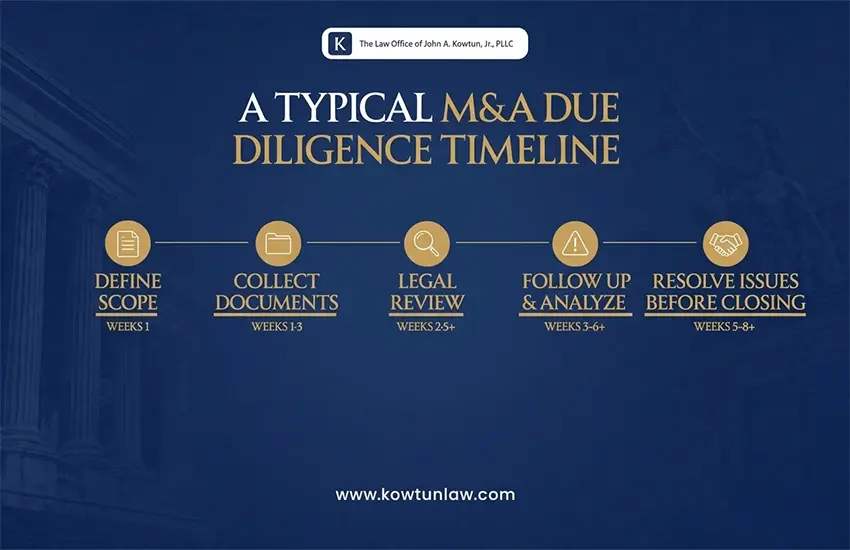
M&A due diligence does not follow one fixed schedule, and the stages often overlap. Legal, financial, tax, operational, commercial, and other diligence workstreams may run concurrently. The timeline below provides a general framework rather than a fixed sequence.
| Stage | Approximate timing | What happens |
| 1. Define the scope and prepare the request list |
Week 1 |
The buyer and its advisors identify the areas requiring review and prepare the initial document and information requests. |
| 2. Collect and organize documents |
Weeks 1–3 |
The seller provides records. Additional requests may follow as gaps or questions arise. |
| 3. Legal review and investigation |
Weeks 2–5+ |
Counsel reviews corporate records, contracts, litigation, assets, liabilities, and other legal matters relevant to the transaction. |
| 4. Follow-up and risk analysis |
Weeks 3–6+ |
Advisors investigate issues identified during the review, request clarification, and assess how findings could affect the transaction. |
| 5. Resolve issues before closing |
Weeks 5–8+ |
The parties determine how material issues should be addressed through deal terms, additional protections, consents, corrective action, or other measures. |
These timeframes are approximate. A straightforward transaction with complete records may move more quickly, while missing information, third-party approvals, or other complications can extend individual stages. Some workstreams may also continue through signing and toward closing rather than ending at a specific stage.
Stage 1: Defining the Scope and Preparing the Request List
The process typically begins by identifying what needs investigation. Counsel may prepare a due diligence request list based on the target company, its industry, and the proposed transaction structure. The initial request may cover corporate records, contracts, assets, debts, litigation, employment matters, licenses, intellectual property, real estate, and other relevant information.
Stage 2: Collecting and Organizing Documents
The seller then provides responsive records. The speed of this stage can depend heavily on the quality and availability of the seller’s records. The initial document production often leads to additional questions and requests.
Stage 3: Legal Review and Investigation
Once relevant documents are available, counsel begins the substantive review. This may include corporate organization and authority, material contracts, litigation and legal exposure, assets, liabilities, and other matters relevant to the transaction. The scope can differ significantly between an asset acquisition and an equity acquisition because the buyer is acquiring different legal interests.
Stage 4: Follow-Up Questions and Risk Analysis
Due diligence rarely consists of a single document request followed by a final report. New information may raise questions about contracts, litigation, ownership, or other potential risks. Advisors investigate those issues and assess what they mean for the proposed transaction.
Stage 5: Resolving Issues Before Closing
A single red flag does not automatically prevent a transaction from proceeding. Depending on the issue, the parties may address it through additional representations and warranties, indemnification provisions, closing conditions, third-party consents, corrective action, changes to the transaction structure, or revised deal terms. In some cases, significant concerns may cause a buyer to reconsider the transaction.
What Can Delay M&A Due Diligence?

One of the most common causes of delay is incomplete information. If a seller repeatedly provides documents in stages, counsel may be unable to complete the analysis because one document depends on another. Other common causes of delay include complex ownership structures, unresolved litigation, unusual contractual arrangements, missing corporate records, and discrepancies between the seller’s representations and the underlying documents.
Third-Party Consents Can Affect the Schedule
Some issues cannot be resolved solely between the buyer and seller. A landlord, lender, customer, vendor, or other third party may need to consent to an assignment, change of control, or other aspect of the transaction. Identifying these requirements early can help prevent them from becoming last-minute closing issues.
Can M&A Due Diligence Be Completed Faster?
Sometimes, but speed should not become the primary objective. Shortening the review simply to meet an aggressive closing date can create risk. An undiscovered contractual restriction, lawsuit, lien, or compliance issue may have consequences long after the transaction has closed.
Does Due Diligence Continue Until Closing?
It can. Initial due diligence may be substantially completed before definitive transaction documents are signed, but new information can arise between signing and closing. Transaction documents may also require the seller to provide updated disclosures or satisfy particular conditions before the deal can close. The precise process depends on how the transaction is structured. This is one reason due diligence should be viewed as part of the transaction process rather than as a single checklist completed on a particular date.
What Happens When Due Diligence Finds a Potential Red Flag?

Finding a red flag does not necessarily mean the investigation has failed. Identifying potential problems before closing is one of the main reasons to conduct due diligence. The important questions become:
How serious is the issue?
Can it be corrected before closing?
Does it change the value or risk profile of the transaction?
Should the transaction documents allocate that risk differently?
For example, an undisclosed lawsuit may require further investigation and additional contractual protection. A missing third-party consent may become a closing condition. A significant discrepancy in an asset’s ownership may require resolution before the buyer proceeds. In each situation, the finding gives the buyer information to consider before committing to the transaction.
Start Due Diligence Early in a Texas Business Acquisition
There is no single answer to how long M&A due diligence takes. A focused review may take only a couple weeks, while a more complicated acquisition can require substantially more time. What matters is allowing enough time to investigate the target company, follow up on inconsistencies, and understand significant risks before the transaction reaches closing.
Kowtun Law provides due diligence services for business purchases, mergers, and acquisitions, with a focus on corporate filings, contracts, assets, liabilities, litigation, and other legal or reputational risks that can affect a transaction. If you are considering the purchase of a business in Texas, contact Kowtun Law to discuss the scope of legal due diligence appropriate for the proposed transaction.
FAQs About M&A Due Diligence in Texas
How long does due diligence take when buying a business in Texas?
There is no fixed due diligence period under Texas law for private business acquisitions. A relatively straightforward review may take a couple of weeks, while a more complex transaction can take several weeks or months depending on the transaction structure, records, legal issues, and other factors.
What causes M&A due diligence to take longer?
Delays can result from missing or disorganized records, slow responses to information requests, complex corporate structures, extensive contracts, litigation, or issues that require further investigation. New concerns raised during the review can lead to additional questions and require more work.
Does the type of M&A transaction affect the due diligence timeline?
Yes. An asset purchase, equity purchase, and merger can involve different legal and contractual issues. The scope of the review may therefore differ depending on what the buyer is acquiring and which liabilities or obligations the buyer may assume as part of the transaction.
Can additional due diligence continue after signing?
Yes. Depending on the transaction documents, certain due diligence matters may continue after signing and before closing. Buyers may still need to verify information, satisfy closing conditions, obtain third-party consents, or investigate issues that arise before the transaction closes.
What happens if due diligence uncovers a legal problem?
The response depends on the nature and significance of the issue. The parties may resolve it before closing, obtain required consent, modify the transaction documents, negotiate additional contractual protections, or reconsider certain deal terms. A significant issue may also affect whether the buyer decides to proceed.
What documents are reviewed during M&A due diligence?
The documents depend on the transaction. Legal due diligence may include formation and governing documents, ownership records, material contracts, leases, financing documents, licenses, litigation records, employment agreements, intellectual property records, and documents relating to significant assets and liabilities.
Recent Blogs
-

What Is an Automatic Renewal Clause and What Are Some Potential Pitfalls?
-
How to Conduct a Workplace Investigation: A Step-by-Step Guide
-

What Are the Benefits of Having a Detailed Operating Agreement for a New Business?
-

What Business Owners Must Know Before Signing Contracts
-

LLC vs Corporation vs Partnership: How to Choose the Right Business Structure in Texas
Peace of Mind for Your Business Decisions
Schedule your confidential consultation today!
© Copyright 2025-26 All Rights Reserved.