
How to Conduct a Workplace Investigation: A Step-by-Step Guide
When an employee reports harassment, discrimination, misconduct, or another serious workplace concern, an employer needs a process for establishing what happened before deciding what action to take.
For Texas employers, a workplace investigation should be prompt, objective, and appropriate to the nature of the allegation. That means defining the issue, preserving relevant information, interviewing the people involved, and reaching findings based on the available evidence rather than assumptions.
Here is a practical framework for conducting a workplace investigation.
| Step |
What It Covers |
Key Action |
|
1 |
Assess the Complaint |
Determine what is being alleged and whether further investigation is appropriate. |
|
2 |
Consider Immediate Measures |
Address temporary workplace concerns while preserving the integrity of the investigation. |
|
3 |
Select an Investigator |
Choose an investigator who can approach the matter objectively and appropriately. |
|
4 |
Define the Scope |
Establish the people, dates, and policies relevant to the investigation. |
|
5 |
Preserve and Review Evidence |
Identify, preserve, and examine records that may help establish what happened. |
|
6 |
Interview the Complainant |
Gather the complainant’s account and identify potential witnesses and supporting evidence. |
|
7 |
Interview the Accused |
Give the accused employee an appropriate opportunity to respond to the allegations. |
|
8 |
Interview Witnesses |
Obtain firsthand information from people who may have relevant knowledge. |
|
9 |
Evaluate the Evidence |
Assess witness accounts, documents, and other available evidence. |
|
10 |
Document the Findings |
Create a clear record of the investigation, evidence reviewed, and factual findings. |
Step 1: Assess the Complaint and Determine What Needs Investigation
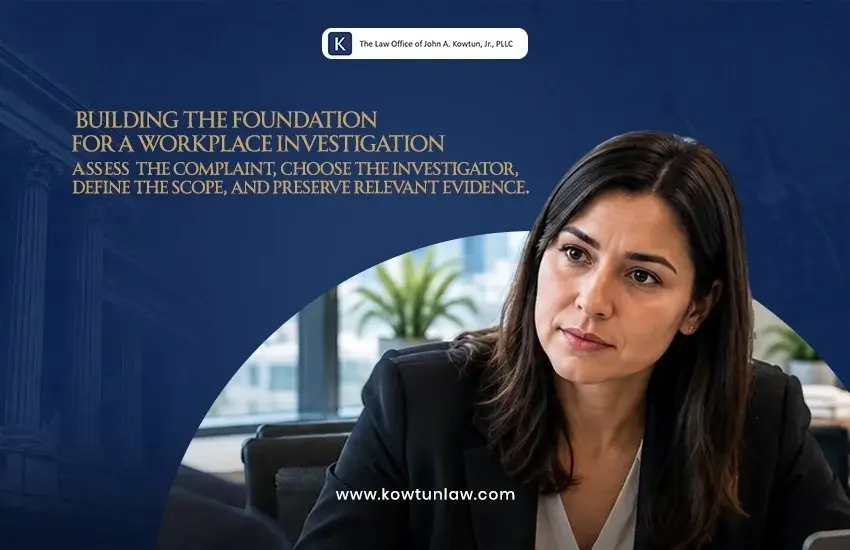
Not every workplace disagreement requires a formal investigation. However, an employer should take allegations seriously enough to determine whether further inquiry is necessary.
An investigation may be appropriate following allegations involving:
- Discrimination or Harassment;
- Retaliation;
- Employee Misconduct;
- Theft or Fraud;
- Threats or Workplace Safety Concerns;
- Violations of Company Policies; or
- Other Conduct That May Expose the Company to Legal or Operational Risk.
The initial assessment should identify the alleged conduct, the people involved, and the approximate time and place of the events.
An employee does not necessarily need to submit a formal written complaint before an employer should consider investigating. Management may become aware of potentially serious conduct through a supervisor, witness, informal report, or other source.
Avoid Reaching Conclusions at the Complaint Stage
Receiving an allegation is not the same as establishing that misconduct occurred.
The employer should avoid treating either the complainant or the person accused as though the facts have already been determined. The investigation aims to establish a reliable factual record on which subsequent decisions can be based.
Step 2: Consider Immediate Workplace Measures
Some allegations require the employer to consider whether temporary measures are necessary while the investigation is underway.
The appropriate response depends on the circumstances. An employer might need to address reporting relationships, workplace contact, access to particular records or systems, or other immediate concerns.
Any interim measure should be considered carefully. A measure intended to protect the integrity of the investigation should not unnecessarily disadvantage the employee who raised the concern.
This is particularly important when the complaint involves conduct protected by employment law.
Step 3: Select an Appropriate Investigator
The investigator should be able to approach the allegations objectively.
For some routine matters, an appropriate HR professional or manager may be able to conduct the investigation. More serious or sensitive allegations can raise additional considerations about independence and potential conflicts.
An employer may consider an outside investigator when:
- senior management or ownership is involved;
- internal HR personnel are implicated; or
- the matter creates significant legal exposure or presents complex investigative issues.
Internal HR Investigator vs. Outside Investigator
| Internal HR Investigator | Outside Investigator |
| May be appropriate for routine or lower-complexity workplace matters. | May be appropriate for sensitive, complex, or higher-risk matters. |
| Already understands the company’s policies, workplace structure, and personnel. | Brings greater separation from existing workplace relationships and internal dynamics. |
| May be efficient when the investigator has the necessary experience and no conflict of interest. | May provide additional independence, investigative experience, or legal knowledge where needed. |
The appropriate choice depends on the allegations, the investigator’s experience, potential conflicts, and the circumstances of the workplace.
Independence Matters
An investigator should not have a personal interest in the outcome. Even where an investigator believes they can remain objective, an existing relationship with the complainant, accused employee, or underlying dispute can create questions about the reliability of the process.
Choosing an independent investigator at the outset can be an important part of protecting the integrity of the investigation.
Step 4: Define the Scope of the Investigation
Before interviews begin, identify the questions the investigation is intended to answer.
A broad instruction to “investigate the complaint” may not provide enough direction. Instead, the scope might identify specific allegations, relevant dates, individuals involved, and policies potentially implicated.
For example, the investigation might need to determine whether a particular conversation occurred, whether specified conduct violated a company policy, or whether other employees witnessed the reported behavior.
Defining the scope keeps the investigation focused while still allowing the investigator to pursue relevant new information as it emerges.
Prepare an Investigation Plan
Depending on the complexity of the matter, a written plan may identify:
- The allegations being investigated;
- Relevant company policies;
- Potential witnesses;
- Records that need to be collected;
- The proposed sequence of interviews; and
- Issues requiring follow-up.
The plan should remain flexible. Evidence obtained during an interview may identify another witness or document that was not known when the investigation began.
Step 5: Preserve and Review Relevant Evidence
An investigation should consider relevant evidence before conclusions are reached.
Depending on the allegations, that evidence may include:
- Emails;
- Text or workplace messages;
- Personnel records;
- Company policies;
- Schedules and time records;
- Performance records;
- Photographs;
- Security or access records;
- Prior complaints; and
- Other business records connected with the events.
Employers should consider whether potentially relevant records need to be preserved so they are not deleted or altered through routine business processes.
The investigator can then use those records to develop more focused questions and compare witness accounts with contemporaneous evidence.
Step 6: Interview the Complainant
The person who raised the concern will usually be an important source of information.
The investigator should seek facts, not assumptions or conclusions. Useful areas of inquiry can include what happened, when and where it occurred, who was present, whether similar conduct occurred previously, and what records might support or contradict the account.
Open-ended questions can allow the employee to provide information without the investigator suggesting the desired answer.
Follow-up questions can then clarify dates, statements, sequences of events, and other relevant details.
Ask About Potential Witnesses and Documents
The complainant may know about evidence that is not immediately apparent from the initial complaint. Before concluding the interview, the investigator should generally determine whether there are additional witnesses, communications, documents, or events that should be considered.
That information can shape the remaining investigation.
Step 7: Interview the Employee Accused of Misconduct
The person accused should have an appropriate opportunity to respond to the substance of the allegations.
The investigator should explain the relevant allegations without treating them as established facts and obtain the employee’s account of what occurred.
That interview may identify alternative explanations, additional witnesses, or documents requiring further review.
The investigator should test significant factual differences through follow-up questions rather than simply deciding which employee appears more convincing during the initial interviews.
Step 8: Interview Relevant Witnesses
Witness interviews should focus on what each person personally saw, heard, or otherwise knows.
Questions should generally avoid assuming that misconduct occurred. Instead of asking a witness whether another employee “harassed” someone, for example, the investigator can ask what the witness observed and allow the facts to emerge from the response.
Witnesses may also identify further evidence that needs to be collected.
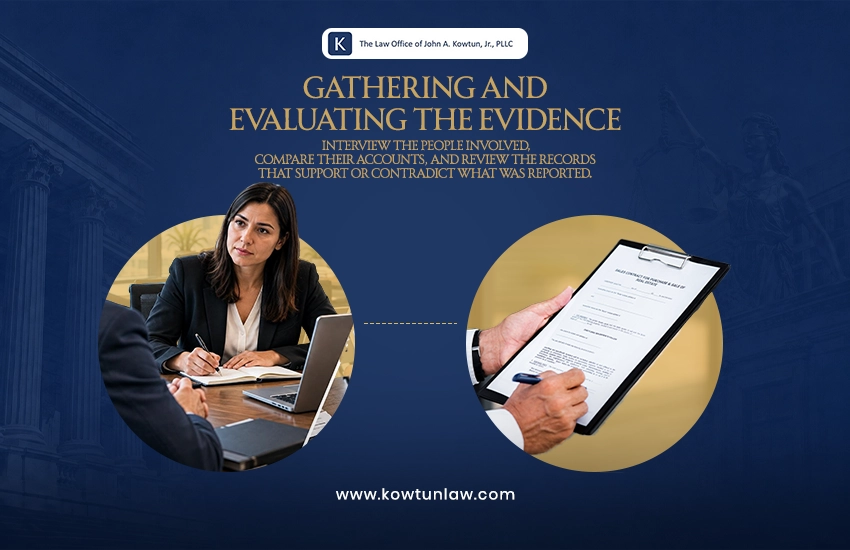
Keep the Investigation Appropriately Limited
Sensitive workplace allegations should generally be discussed only with people who need information for the investigation or subsequent decision-making.
However, an employer should avoid making absolute promises that everything said during an investigation will remain confidential. Information may need to be disclosed to investigate the allegation properly, obtain legal advice, or respond to later administrative or legal proceedings.
Step 9: Evaluate the Evidence
After collecting relevant information, the investigator must assess the evidence as a whole.
That can involve considering whether accounts are internally consistent, whether contemporaneous records support a particular version of events, whether witnesses had direct knowledge, and whether significant evidence conflicts with an individual’s account.
Not every investigation produces certainty. The investigator’s task is to make findings using the applicable standard established for the investigation and the evidence actually available, rather than filling evidentiary gaps with speculation.
Step 10: Document the Findings
A written investigation report can provide a record of what was investigated and how the findings were reached.
Depending on the matter, the report may address:
- The scope of the investigation;
- Allegations considered;
- Witnesses interviewed;
- Documents and other evidence reviewed;
- Relevant factual findings; and
- Conclusions within the investigator’s assigned scope.
The report should distinguish factual findings from assumptions and avoid including irrelevant personal information.
Why Work With Kowtun Law on a Workplace Investigation?
Workplace investigations can involve sensitive employee information, competing accounts, complex evidence, and legal considerations that extend beyond simply determining what happened.
Kowtun Law’s investigative legal services can provide Texas businesses with legal support for sensitive internal investigations, including matters involving workplace misconduct. An outside legal investigator can also help provide separation from the company’s existing workplace relationships while bringing legal and investigative experience to the process.
For businesses considering an independent investigation, the focus is not simply on bringing in someone from outside the company. The investigator should have the experience, objectivity, and understanding needed for the particular matter.
Kowtun Law provides independent investigative legal services for Texas businesses dealing with workplace misconduct and other sensitive internal matters.
FAQs
Must a Texas Employer Investigate Every Employee Complaint?
Not every disagreement requires the same level of investigation. However, employers should assess complaints promptly to determine whether the allegations involve discrimination, harassment, retaliation, safety concerns, policy violations, or other conduct requiring further inquiry. Ignoring a potentially serious complaint can create additional risk.
How Long Should a Workplace Investigation Take?
There is no single timeframe appropriate for every investigation. The process should generally move promptly while allowing enough time to interview relevant witnesses, review evidence, and follow up on material inconsistencies. The complexity of the allegations and availability of witnesses and records will affect the timetable.
Can HR Conduct a Workplace Investigation?
Yes, an HR professional may be an appropriate investigator in some circumstances. The important considerations include objectivity, experience, the nature of the allegations, and whether HR personnel are themselves involved.
Should Workplace Investigation Interviews Be Recorded?
Recording raises additional legal and practical considerations and should not be treated as an automatic part of every investigation. Employers should determine the appropriate method of documenting interviews in consultation with counsel and with consideration of applicable law and company practices.
Can an Employee Be Disciplined After a Workplace Investigation?
An employer may determine that disciplinary or other corrective action is appropriate based on substantiated findings and applicable workplace policies.
Are Workplace Investigations Confidential?
An employer can take reasonable steps to limit unnecessary disclosure of sensitive information, but absolute confidentiality should not automatically be promised. Information may need to be shared with witnesses, decision-makers, counsel, or others where necessary to investigate or respond to the matter.
Recent Blogs
-
What Should Be Included in an LLC Operating Agreement?
-

What Is an Automatic Renewal Clause and What Are Some Potential Pitfalls?
-

How Long Does M&A Due Diligence Take in Texas? A Timeline Explained
-

What Are the Benefits of Having a Detailed Operating Agreement for a New Business?
-

What Business Owners Must Know Before Signing Contracts
Peace of Mind for Your Business Decisions
Schedule your confidential consultation today!
© Copyright 2025-26 All Rights Reserved.