

When Should You Form a Business Entity?
When starting a business, most people get so caught up in the hustle that they forget the paperwork until a problem shows up at their door. This delay turns a dream into a legal nightmare before you even get off the ground.
We see it all the time with entrepreneurs. You have a great month of sales, but then you realize you are personally responsible for every single contract you signed. That realization is a heavy weight to carry when you are trying to grow a brand from scratch. It is hard to focus on the future when your personal assets are on the line today.
Deciding the right moment to file with the state is a strategic move. It is about protecting your house and your family’s savings. You want to make sure the foundation is solid before you start building the second floor. Waiting for a crisis to act is a plan that rarely ends well for the owner.
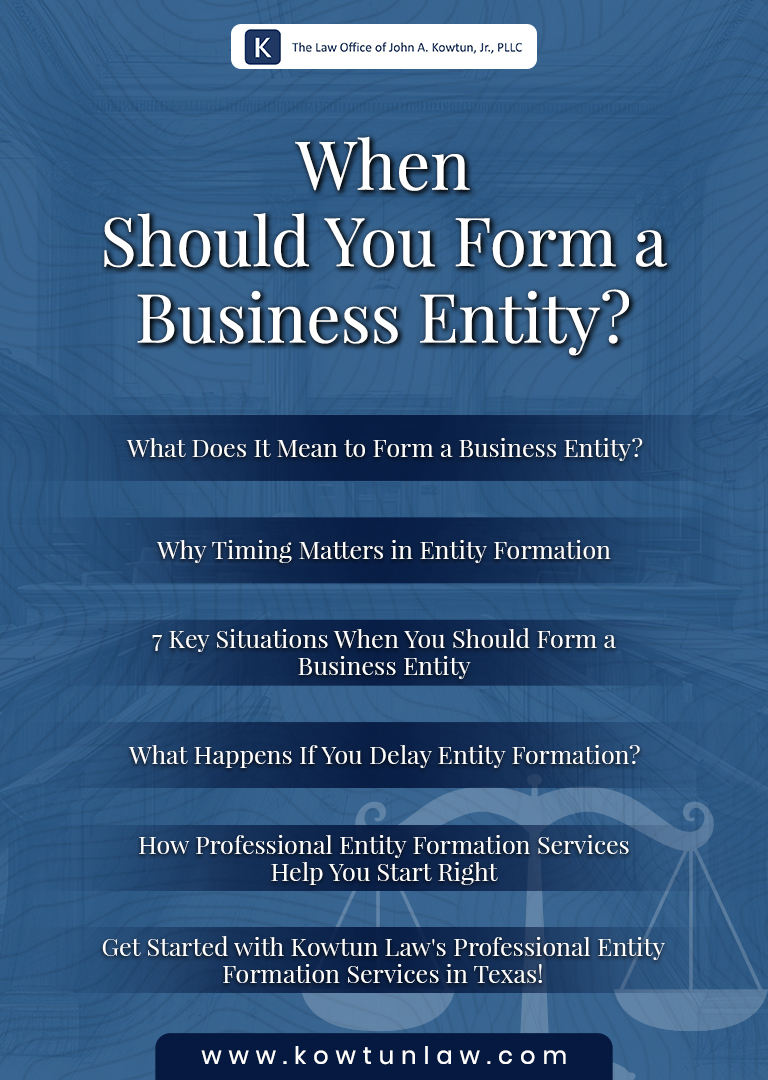
What Does It Mean to Form a Business Entity?
Think of entity formation as creating a legal shield between your personal life and your work. When you choose a structure like an LLC, a partnership, or a corporation, the law starts seeing the business as a separate person. This “person” can own property or take out loans in its own name. It stands between your creditors and your personal bank account.
This separation is the core of asset protection. If the business gets into trouble, your personal property stays off-limits to most claimants. You are essentially defining where the business ends and where you begin.
Why Timing Matters in Entity Formation
Waiting too long is a gamble with your personal assets. If you sign a lease or engage a vendor as an individual, you are on the hook if things go sideways. Correctly timing the formation of your business prevents legal risk from impacting your financial health.
7 Key Situations When You Should Form a Business Entity
Every business follows a different path, but certain milestones suggest it is time for a formal structure. Recognize these signs:
1. When You Start Generating Revenue
Once money starts changing hands, the stakes get real. You are no longer just dreaming; you are operating a business.
- There are tax obligations.
- Any potential liability for products or services offered begins.
2. Before Signing Contracts or Agreements
Contracts are binding promises. You want the business to sign those papers so you aren’t personally liable if the deal fails.
- Help shield personal property during disputes.
- Establishes professional credibility with vendors.
3. When Entering a Business Partnership
Working with a partner is risky without a formal agreement. You need a structure that defines who does what, as well as how decisions are made.
- Outlines the split of profits and losses.
- Creates a process for resolving internal disputes.
4. When Seeking Funding or Investment
Investors want to see clear ownership before they write a check. They are buying a piece of a company, not a piece of your personal life.
- Allows for the issuance of shares or membership units.
- Demonstrates that you take the venture seriously.
5. When You Want Liability Protection
If your industry involves physical risk or expensive equipment, protection is mandatory. You cannot afford to leave your personal assets exposed in a work-related accident.
- Help limit legal claims to the assets of the company.
- Offers peace of mind for your family.
6. When You Plan to Scale Your Business
Growth requires a system that can handle more volume and more complexity. A formal entity provides the framework for opening more locations or adding new product lines.
- Makes it easier to open business bank accounts.
- Helps with brand registration and trademarking.
- Facilitates the sale of the business later on.
What Happens If You Delay Entity Formation?
Staying as a sole proprietor might seem easy, but it leaves you vulnerable to a list of problems. The “wait and see” approach often ends with a phone call to a lawyer after the damage is already done. You could end up spending far more to fix a mess than you would have spent to prevent it.
- Personal liability for potential business lawsuits.
- Vulnerability to legal disputes with partners.
- Difficulty securing traditional business loans.
How Professional Entity Formation Services Help You Start Right
At Kowtun Law, we look at your specific situation to see which structure fits best. It isn’t just about filing a form on a state website. It is about choosing a path that makes sense for your taxes and your long-term goals.
Get Started with Kowtun Law’s Professional Entity Formation Services in Texas!
Your business is more than just a job; it is your legacy. We want to help you protect it from the start so you grow with confidence.
We look at your current plans and find the entity that works for you. It is time to get serious about your protection and stop worrying about “what if” scenarios.
Contact our office today. We are ready to help you build your business on a solid legal foundation. Your future self will thank you.
Frequently Asked Questions
What is the purpose of a business entity?
The primary purpose of a business entity is to facilitate activities, such as producing goods or providing services for a profit, while creating a distinct legal structure separate from its owners.
What is an example of a business entity?
Common examples include sole proprietorships, partnerships, Limited Liability Companies (LLCs), and corporations (C-corps/S-corps).
What does it mean to form a business entity?
Forming a business entity means legally registering your business as a separate structure, such as an LLC or corporation, distinct from you as an individual.
Can I operate a business without forming an entity?
Yes, you can operate as a sole proprietor. But you won’t have liability protection, and your personal assets may be at risk.
Do I need a lawyer to form a business entity?
Not always but hiring legal counsel ensures you choose the right structure for your needs and that your documents are tailored to your specific needs.
Recent Blogs
-

What Are the Benefits of Having a Detailed Operating Agreement for a New Business?
-
What Business Owners Must Know Before Signing Contracts
-
LLC vs Corporation vs Partnership: How to Choose the Right Business Structure in Texas
-
Independent Contractor vs Employee: What Your Business Contract Must Clearly State
-
How to Handle Employee Complaints the Right Way (Before They Become Lawsuits)

Peace of Mind for Your Business Decisions
Schedule your confidential consultation today!
© Copyright 2025-26 All Rights Reserved.